Rev Bras Oftalmol.2026;85:e0097
Agreement between the QuickSee Free™ wavefront autorefractor and subjective clinical refraction in schoolchildren

DOI: 10.37039/1982.8551.20260097
ABSTRACT
Objective:
To compare refractive measurements obtained with the QuickSee Free™ (QSFree) wavefront autorefractor, with and without a +2.00 D fogging lens, against subjective clinical refractometry (SCR) under cycloplegia in schoolchildren aged 7 to 17 years.
Methods:
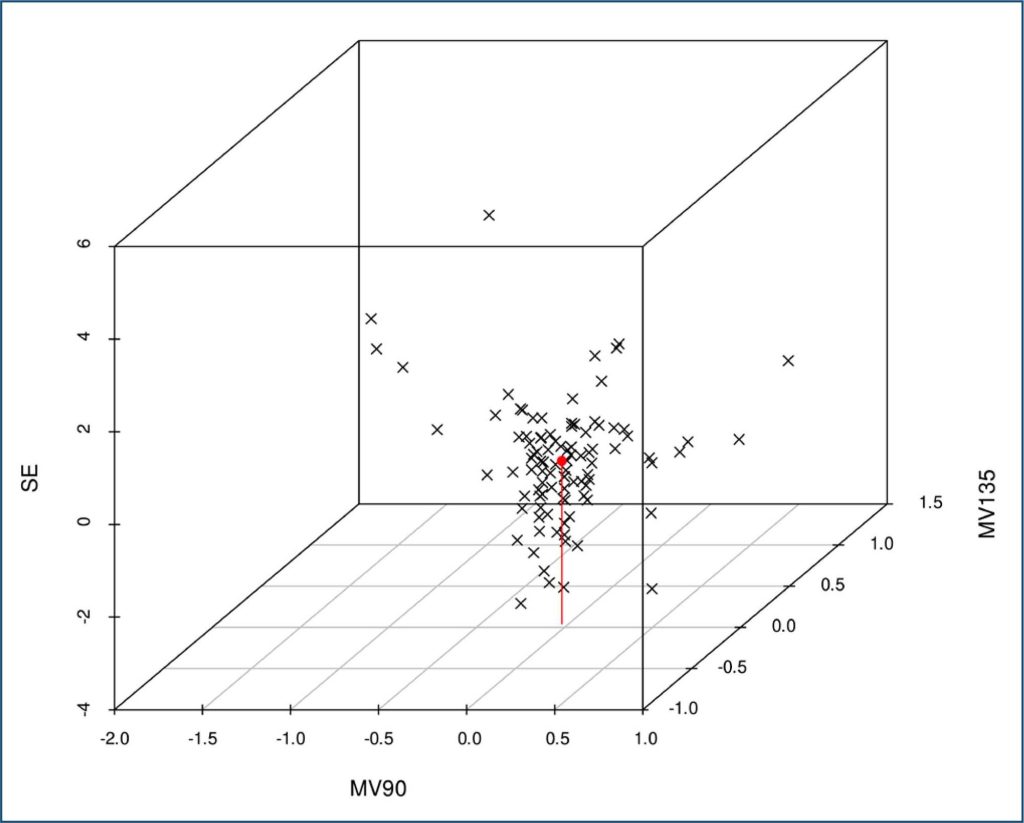
One hundred right eyes from 100 healthy Brazilian schoolchildren were evaluated using QSFree without cycloplegia, QSFree with a +2.00 D fogging lens, QSFree under cycloplegia, and SCR under cycloplegia. Refractions were converted into spherical equivalent (SE) and astigmatic vector components projected onto the 90° (MV90) and 135° (MV135) meridians according to Naeser’s method. Comparisons were performed using Wilcoxon signed-rank and the Hotelling tests.
Results:
Compared with cycloplegic SCR, QSFree without cycloplegia showed a clinically relevant SE difference of −1.06 ± 1.22 D (p<0.0001). Similar results were observed with the +2.00 D fogging lens (−1.01 ± 1.22 D; p<0.0001). In both comparisons, MV90 and MV135 differences were clinically irrelevant (<0.25 D). When both QSFree and SCR were performed under cycloplegia, the SE difference was −0.48 ± 1.29 D (p<0.0001), which was not clinically relevant.
Conclusion:
QSFree demonstrated high agreement with subjective clinical refractometry under cycloplegia. The +2.00 D fogging lens did not provide accommodation control equivalent to cycloplegia and should not replace cycloplegic refraction in schoolchildren.
Keywords: Cycloplegia; Refractometry; Students