Rev Bras Oftalmol.2026;85:e0116
TP53 codon 72 polymorphism is associated with susceptibility to acute primary angle-closure in Brazilian patients

DOI: 10.37039/1982.8551.20260116
ABSTRACT
Objective:
To compare the association between TP53 codon 72 polymorphism and primary angle-closure glaucoma in Brazilian patients, with emphasis on acute primary angle closure attack.
Methods:
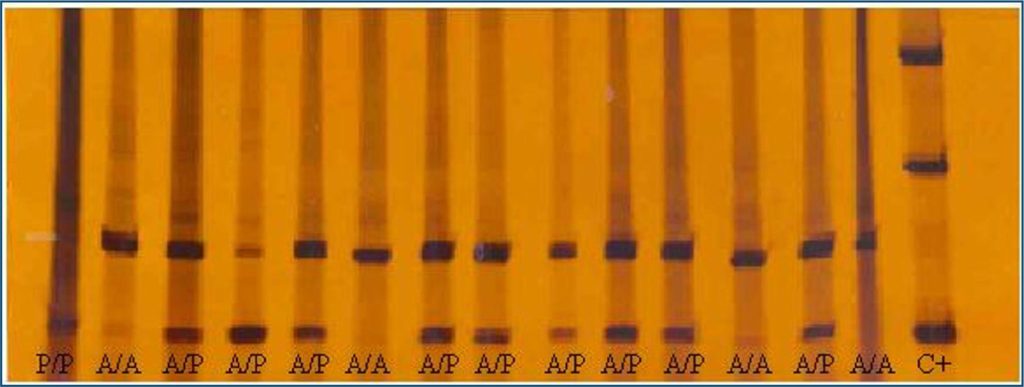
The TP53 codon 72 (exon 4) genotype status of 67 primary angle-closure glaucoma patients and 72 healthy (controls) was analyzed using polymerase chain reaction with the restriction fragment length polymorphism method and sequence analysis. The association of the polymorphism and primary angle-closure glaucoma with or without acute primary angle closure attack was evaluated using contingency tables with chi-square and Fisher’s exact tests.
Results:
No significant difference in genotype frequency for the TP53 polymorphism was observed between primary angle-closure glaucoma patients and controls (p = 0.39). Patients with previous acute primary angle closure attack showed a higher frequency of 72-PRO allele (p = 0.025).
Conclusion:
TP53 codon 72 polymorphism was not associated with primary angle-closure glaucoma overall. Nevertheless, the higher frequency of the PRO allele among patients with acute primary angle closure suggests that TP53 may represent a genetic marker of susceptibility to acute angle-closure events, possibly related to ocular anatomical predisposition.