Rev Bras Oftalmol.2025;84:e0104
Assessing a deep learning tool for cataract detection using a public dataset

DOI: 10.37039/1982.8551.20250104
ABSTRACT
Objective:
To assess the diagnostic accuracy of a deep learning tool for cataract detection using retinal images from the Ocular Disease Intelligent Recognition (ODIR) public dataset.
Methods:
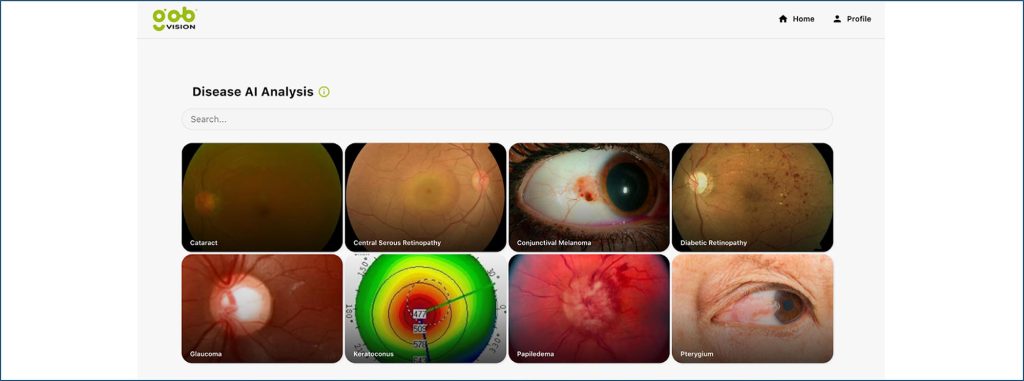
The study was conducted using a publicly available dataset, with a web-based Artificial Intelligence tool. This was an observational, cross-sectional study. A total of 230 fundus images were selected from the ODIR dataset, equally divided between 115 cataract cases and 115 non-cataract cases. The images were processed using the Gobvision Artificial Intelligence tool, which employs a convolutional neural network (MobileNet-V2) to classify the presence of cataract. Key performance metrics such as sensitivity, specificity, and accuracy were calculated.
Results:
The deep learning model for cataract diagnosis, tested on 230 eyes, achieved an accuracy of 94.35%, with a sensitivity of 93.91%, specificity of 94.78%, positive predictive value of 94.74%, and negative predictive value of 93.97%. The F1-score was 0.94, and Cohen’s Kappa of 0.89 indicated high agreement with clinical diagnoses.
Conclusion:
Gobvision Artificial Intelligence demonstrated high accuracy and reliability in detecting cataract using fundus images. This Artificial Intelligence tool has significant potential to enhance cataract screening, especially in regions with limited access to ophthalmologists.