Rev Bras Oftalmol.2025;84:e0071
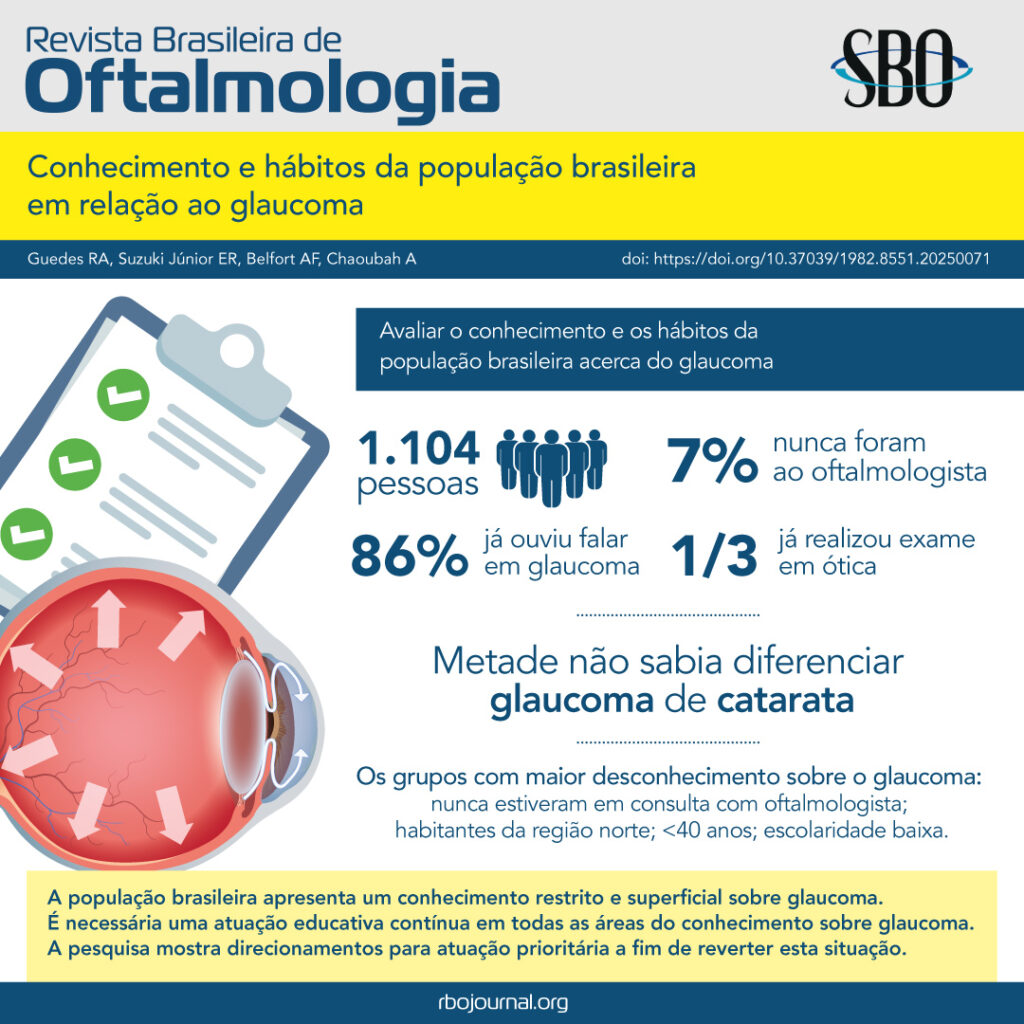
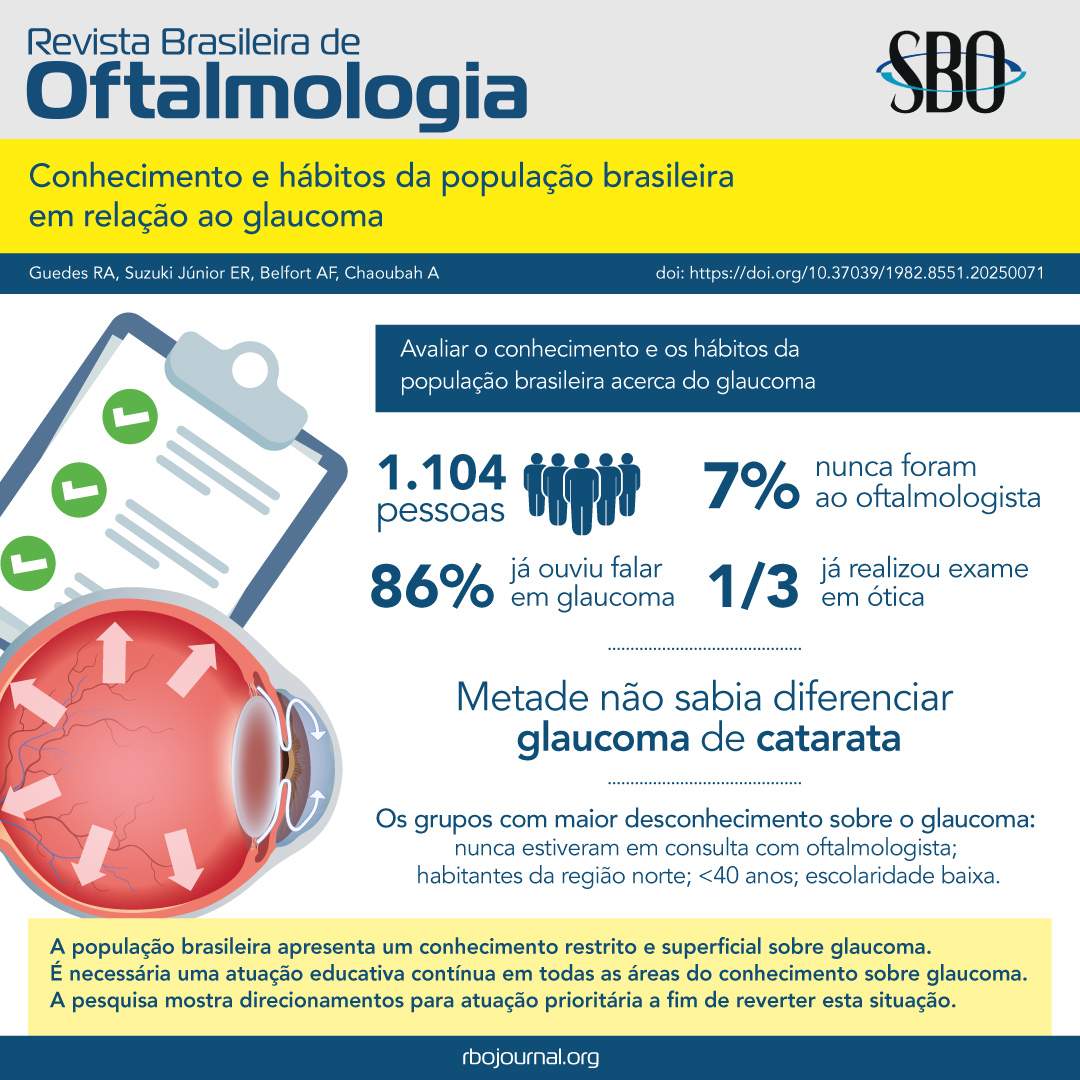
Knowledge and habits of the Brazilian population regarding glaucoma

DOI: 10.37039/1982.8551.20250071
ABSTRACT
Objective:
To assess the Brazilian population’s knowledge and habits regarding glaucoma.
Methods:
A cross-sectional study was conducted with a random sample calculated to be representative of the Brazilian population. Data collection was conducted by a company specialized in population surveys through telephone calls. A structured questionnaire was used with questions about glaucoma, including its concept, risk factors, and treatment, as well as eye health prevention habits and attitudes. All interviews were recorded and reviewed.
Results:
The study population consisted of 1,104 people from all Brazilian regions, with a mean age ± standard deviation (minimum and maximum) of 48.1 ± 15.1 years (range: 18 to 90 years). Among the interviewees, 7% had never seen an ophthalmologist, 30% only saw one when experiencing ocular or visual symptoms, and one-third had already had an eye exam in an optician’s store. Although the majority (86.8%) had heard of glaucoma, this knowledge proved to be superficial and inadequate. Half of the respondents did not know how to differentiate glaucoma from cataracts; more than 40% believed glaucoma was curable and its blindness was reversible; 20% did not know how it was treated; 14% believed glaucoma was treated with glasses; and 10% believed it was treated with eye exercises. The population groups identified as having the greatest lack of knowledge about glaucoma were individuals who had never seen an ophthalmologist; residents of the northern region; those under 40 years of age; and those with low education level.
Conclusion:
The results demonstrate that the Brazilian population has limited and superficial knowledge about glaucoma. It was possible to identify the need for ongoing educational interventions in all areas of knowledge about glaucoma, as well as the population groups with priority needs for action.
Keywords: Epidemiology; Knowledge; Prevention; Surveys and questionnaires