Rev Bras Oftalmol.2024;83:e0062
Long-term real-world outcomes of second-generation trabecular micro-bypass in open-angle glaucoma

DOI: 10.37039/1982.8551.20240062
ABSTRACT
Objective:
To evaluate the real-world long-term effectiveness and safety of the standalone use or in combination with cataract surgery of the second-generation trabecular implant, iStent inject®.
Methods:
A retrospective longitudinal study was carried out on a series of cases that underwent iStent inject® trabecular implantation alone and associated with cataract surgery. In addition to sociodemographic data, the parameters evaluated included intraocular pressure, number of medications, visual acuity, and possible complications from surgical interventions throughout follow-up. The effectiveness of the procedure was measured through absolute success rates (without the use of hypotensive medication) and relative success (with or without the use of adjuvant medication) for different IOP targets (18, 15 and 12 mmHg). Safety considered the incidence of complications and reinterventions throughout the evaluated period. A comparative analysis was performed on eyes undergoing surgery alone versus surgery combined with cataract.
Results:
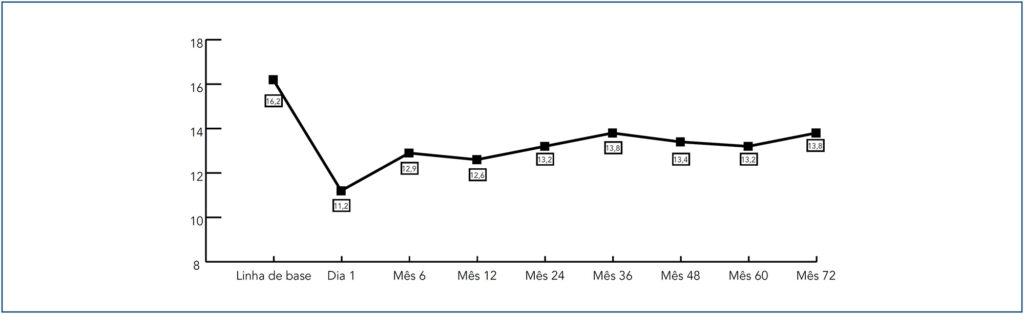
The average age was 68.7 years with an average follow-up time of 40 months (12-72 months). Considering the entire studied population, an average reduction in IOP of 16.5% was observed at the end of follow-up (mean final IOP: 13.8 mmHg, p<0.001 in relation to baseline IOP). The final number of medications needed was also lower, with an average reduction of 72.8% (p<0.001). There were no differences in the final mean IOP between the groups; however, the combined surgery provided a significantly lower final mean number of medications (0.4 versus 1.5, p<0.001). Both groups achieved high success rates, with combined surgery showing a trend toward superiority.
Conclusion:
The iStent inject® proved to be a safe and effective alternative as a therapeutic possibility for eyes with open-angle glaucoma when implanted independently or associated with cataract surgery. Furthermore, it demonstrated a sustained response up to 72 months of follow-up.