Rev Bras Oftalmol.2025;84:e0098
Parental awareness and its role in amblyopia detection and treatment

DOI: 10.37039/1982.8551.20250098
ABSTRACT
Objective:
To evaluate parents’ knowledge and perceptions about amblyopia and its treatment after their child’s diagnosis.
Methods:
A cross-sectional study included parents of 30 children diagnosed with amblyopia, recruited from a pediatric ophthalmology clinic. Participants completed a questionnaire after the diagnosis of their children, before receiving amblyopia education. The questionnaire assessed parental knowledge, socioeconomic background, and barriers to care. Statistical analyses included descriptive statistics and logistic regression to identify factors associated with awareness and adhesion.
Results:
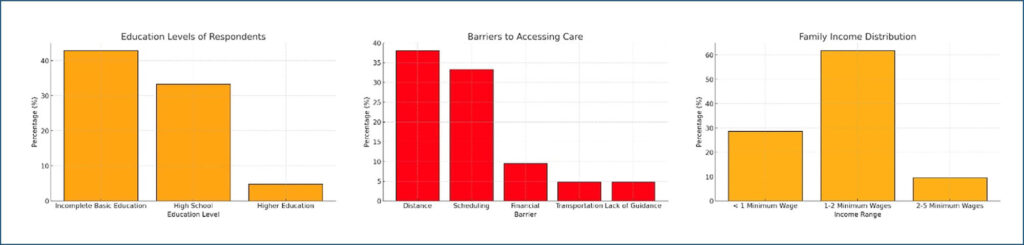
Most parents (85.7%) reported regular pediatric follow-ups, significantly linked to earlier referrals (p < 0.001). Parents initiated 47.6% of consultations due to concerns, while pediatricians prompted 23.8%. Socioeconomic disparities were key barriers, with 61.9% earning 1-2 minimum wages. Transportation issues (38.1%) and scheduling conflicts (33.3%) were significant barriers. Adherence to occlusion therapy was challenging for 66.7%, mainly due to child resistance (47.1%).
Conclusion:
Regular pediatric visits support early amblyopia detection. Addressing socioeconomic barriers through school-based vision screening, subsidized transportation, and educational campaigns is essential for improving awareness, diagnosis, and treatment adherence, which could reduce amblyopia’s long-term impact.