Rev Bras Oftalmol.2020;79(2):114-117
Pharmacoepidemiology of the antiglaucoma drugs in Brazil from 2012 to 2018

DOI: 10.5935/0034-7280.20200024
Abstract
Purpose:
To outline the epidemiological profile of clinical treatments for glaucoma provided by the Brazilian Unified Health System (SUS, acronym in Portuguese) between January 2012 and December 2018.
Methods:
A quantitative and descriptive study was conducted using available data based on the outpatient information system from SUS (SIA/SUS, acronym in Portuguese). The variables were monocular treatment with first, second, and third-line drugs; monocular treatment with combinations of two drugs and three drugs from different lines; binocular treatment with first, second, and third-line drugs; and binocular treatment with combinations of two drugs and three drugs from different lines.
Results:
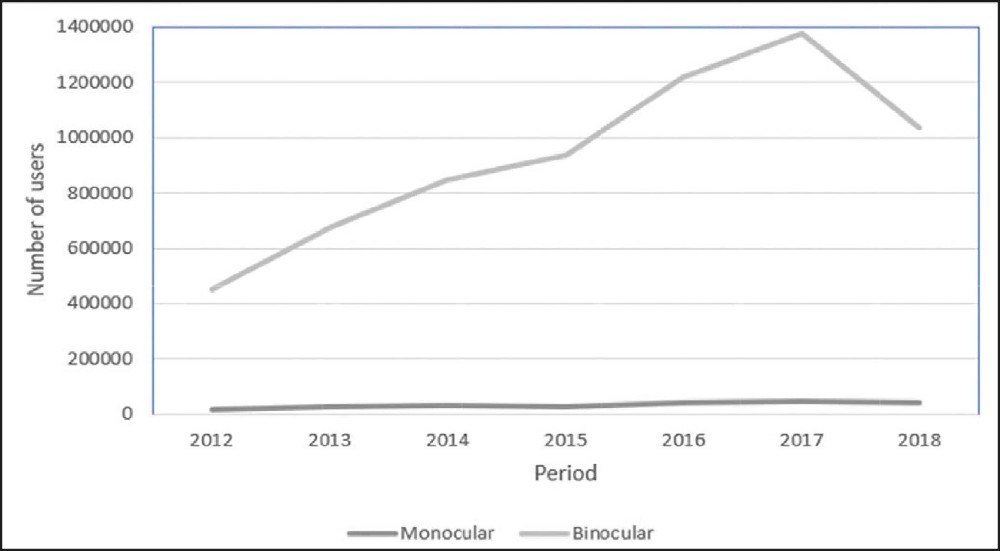
During the analysis period, the prevalence of clinical therapies for glaucoma increased from 2012 to 2017 and decreased from 2017 to 2018. Of the clinically treated patients, 96% were carriers of binocular glaucoma. Among the regions of Brazil, the Northeast had the highest prevalence of binocular glaucoma (about 60% of the number of cases), and the most common therapy was combinations of two drugs from different lines. The Southeast region had the highest concentration of monocular glaucoma (53% of cases), and the predominant therapy was combinations of three drugs from different lines. The Midwest region had the lowest prevalence of monocular-treatments for glaucoma (less than 6%).
Conclusion:
In Brazil, the highest number of treatments offered by the public health system was in the Northeast and Southeast regions. There is a high national prevalence and potential for the morbidity of this disease. Therefore, it is necessary to strengthen programs aimed at early diagnosis and appropriate treatment to reduce adverse outcomes.
Keywords: Brazil; Eyedrops; Glauco/therapy; Intraocular pressure; Sistema Único de Saúde