Rev Bras Oftalmol.2025;84:e0002
Prevalence of refractive error and associated factors in children before COVID-19 pandemic in the South of Brazil

DOI: 10.37039/1982.8551.2025.0002
ABSTRACT
Purpose:
To evaluate the prevalence of refractive errors (RE) in children and their association with age group, sex, and racial variations before the COVID-19 Pandemic.
Methods:
This retrospective cross-sectional study involved 1,086 children with a mean age of 9.1 years (0-15 years) who underwent refraction examination under cycloplegia between 2015 and 2019. Myopia was defined as Spherical Equivalent (SE) −0.50 diopters (D) or more; hyperopia as +2.0 D, and astigmatism as at least −0,50 D. The RE were further divided into groups of 0-3 and correlated with the collected variables.
Results:
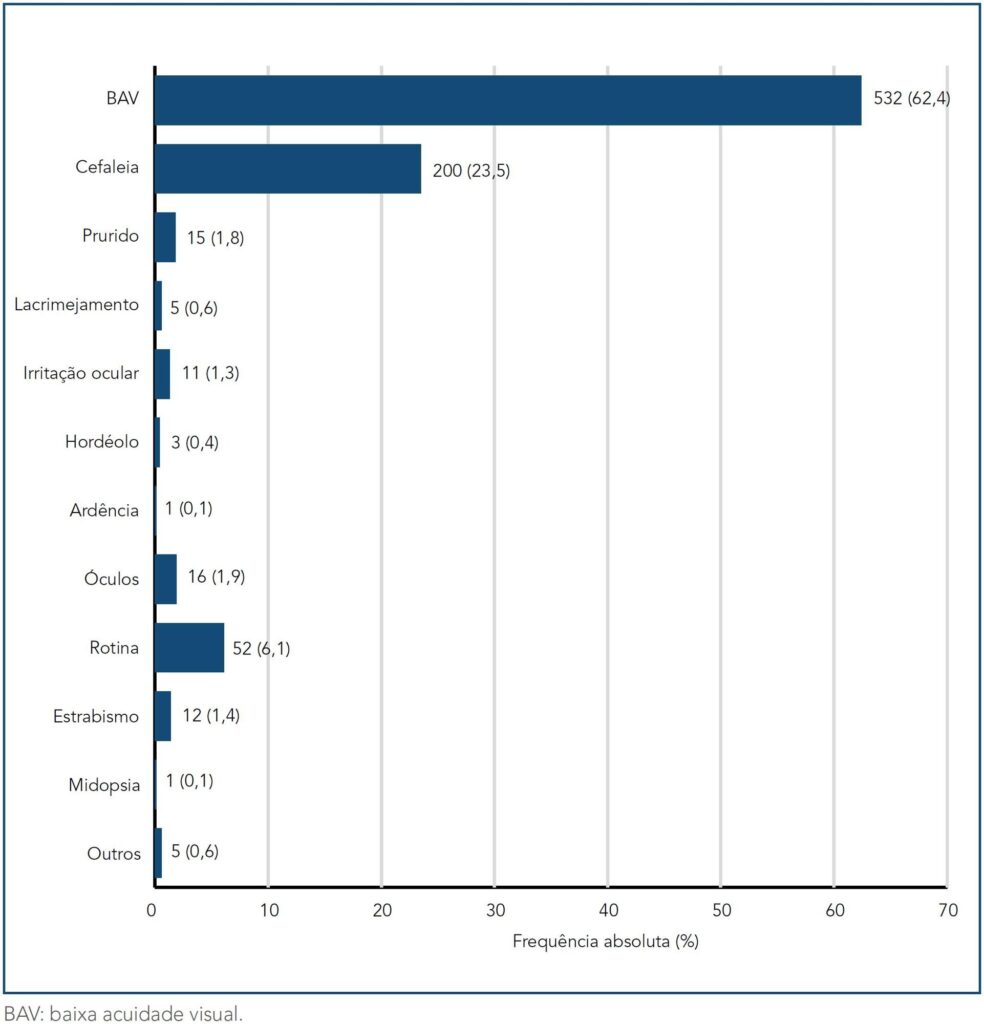
There was a higher prevalence of female individuals (52.4%), aged between 6 and 10 years (63.0%) and white participants (54.9%). Astigmatism was the most prevalent RE in all age groups (27.3%), myopia was present in 14.8% of the sample and hyperopia, in 6.6%. There was an association between the age group >11 years and the prevalence of myopia and astigmatism. There was no association between RE and the variables gender, racial variation, and clinical symptoms of the participants.
Conclusion:
The prevalence of astigmatism and myopia was higher than in other regions of the world. The data was collected in the pre-COVID-19 pandemic period.
Keywords: Brazil; Child; Child, preschool; COVID-19; Pandemics; Refractive errors;; Sociodemographic factors