Rev Bras Oftalmol.2026;85:e0080
Evidence of the influence of an intra-stromal ring implant on slowing the progression of keratoconus

DOI: 10.37039/1982.8551.20260080
ABSTRACT
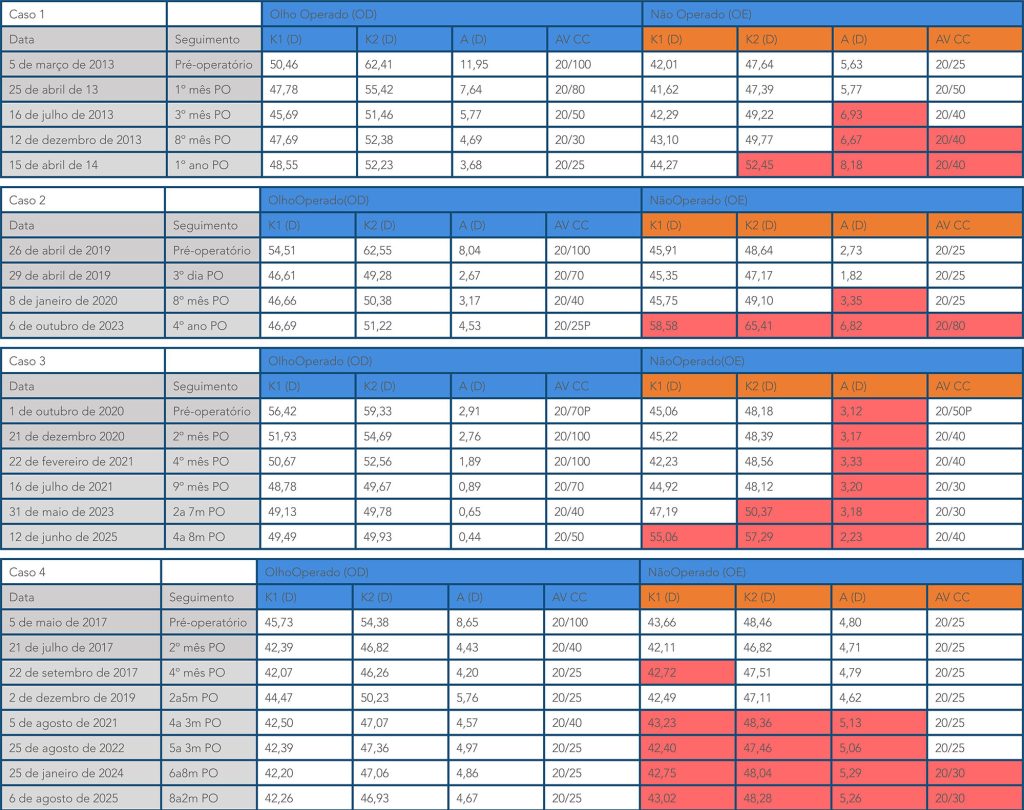
This report aimed to evaluate the evolution of topography, astigmatism, and visual acuity in eyes with keratoconus that underwent intra-stromal ring implant surgery. The report compared these results with those of contralateral, non-operated eyes. The goal was to confirm whether the intra-stromal ring implant surgery could also slow the progression of the disease. Four cases of young and adult patients who underwent corneal ring implant surgery in one eye were analyzed, with clinical and topographic follow-up for up to 8 years. The results were then compared with those of contralateral non-operated eye. Significant improvements in visual acuity and reductions in keratometry and astigmatism were observed in the operated eye with the corneal ring implant. Over time, these parameters remained relatively stable. Meanwhile, the contralateral eye showed progression of keratoconus, evidenced by increased keratometry, astigmatism, and worsening of visual acuity. At different follow-up times, the non-operated eyes began to show worse values than the treated ones. In addition to optical correction, the intra-stromal ring implant, may contribute to slowing the progression of keratoconus in certain cases by exerting a biomechanical stabilizing effect on the cornea and functioning as a rigid structure that reduces stromal deformation. However, prospective studies with a larger number of patients and longer follow-up periods are needed to confirm this potential protective effect, and crosslinking remains the most accepted procedure for disease stabilization.
Keywords: Astigmatism; Córnea; Corneal topography; Keratoconus; Visual acuity