Rev Bras Oftalmol.2026;85:e0104
Evolving patterns of horizontal strabismus in a tertiary care population: a 10-year retrospective study

DOI: 10.37039/1982.8551.20260104
ABSTRACT
Objective:
Strabismus is a common cause of pediatric ophthalmology consultations, yet its etiology remains incompletely understood. This study aimed to describe the clinical and epidemiological characteristics of patients with horizontal strabismus, treated at a tertiary ophthalmic center in São Paulo, Brazil, over a 10-year period.
Methods:
A retrospective cross-sectional review of medical records was conducted for patients with horizontal strabismus between 2012 and 2022. Mechanical, sensory, paralytic, or consecutive deviations were excluded.
Results:
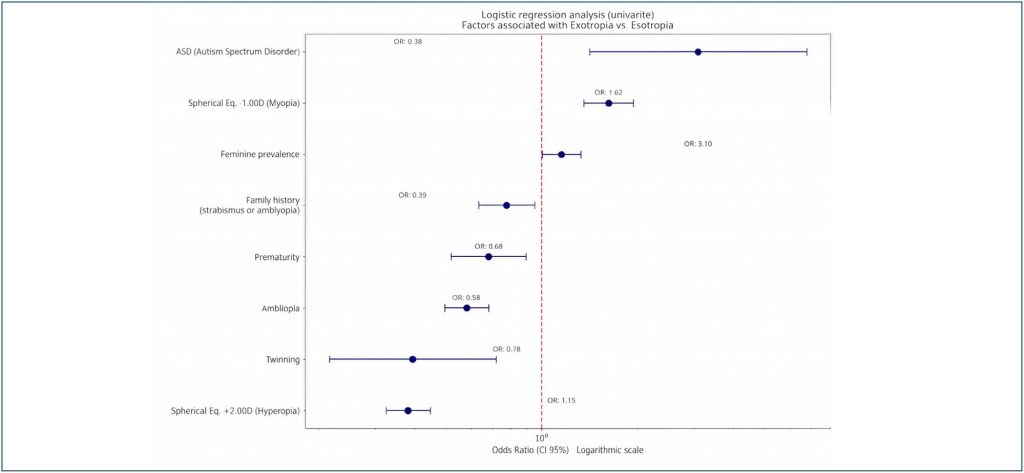
A total of 3,165 individuals were included (52.1% female; mean age, 13.94 years). Esotropia accounted for 56.8% of cases overall; exotropia showed a significant increasing trend in the proportion of cases over the years. Esotropia was more frequently associated with a family history of strabismus or amblyopia, current amblyopia or ongoing treatment, prematurity, twinning, and hyperopia. Exotropia occurred more frequently among females, younger patients at the time of diagnosis, and those with emmetropia or myopia. It was also more commonly associated with an autism spectrum disorder diagnosis.
Conclusion:
The increasing proportion of exodeviation in a predominantly Western population, may represent a changing global landscape of horizontal strabismus.
Keywords: Amblyopia; Epidemiology; Exotropia; Ocular motility disorders; Strabismus