Rev Bras Oftalmol.2025;84:e0083
Sturge-Weber Syndrome in a patient treated at an ophthalmological hospital

DOI: 10.37039/1982.8551.20250083
ABSTRACT
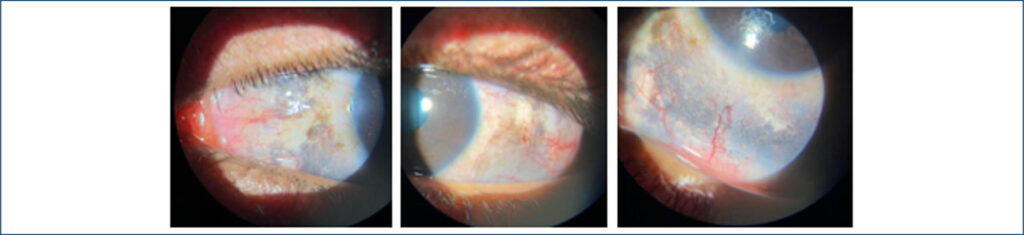
Sturge-Weber Syndrome is a rare, non-hereditary developmental condition characterized by hamartomatous vascular proliferations affecting the brain and facial tissues. Its main features include corticocerebral angiomatosis, cerebral calcifications, epilepsy, ocular abnormalities, mental impairment, and a facial port-wine stain. This report aims to highlight the main features of Sturge-Weber Syndrome in a patient with unilateral facial and scalp nevus, ipsilateral glaucoma, and imaging alterations. A case study was conducted on a patient treated at an ophthalmology clinic. The diagnosis and follow-up of the patient with Sturge-Weber Syndrome and glaucoma were carried out at an ophthalmological center. Recognizing the importance of diagnosing Sturge-Weber Syndrome is essential, as the condition is associated with significant morbidity. Patients diagnosed with this syndrome should be monitored periodically to improve prognosis and clinical management.
Keywords: Angiomatosis; Glaucoma; Sturge-Weber Syndrome