Rev Bras Oftalmol.2026;85:e0062
Fundoscopic evolution of premature newborns with retinopathy of prematurity treated with intravitreal antiangiogenics

DOI: 10.37039/1982.8551.20260062
ABSTRACT
Objective:
To determine the evolution of retinopathy of prematurity in patients treated with intravitreal antiangiogenics in the retina private practice.
Methods:
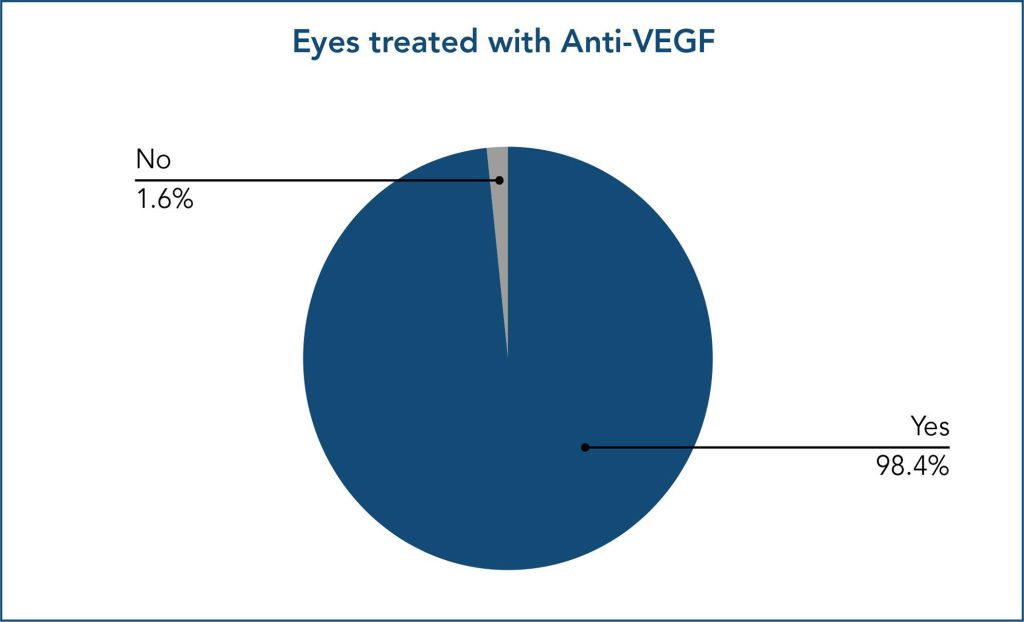
A retrospective descriptive observational case series study was conducted. The study was non-experimental and non-probabilistic. Based on a population of 61 newborns, with a 99% confidence interval and a margin of error of 1%, the sample would be 61 newborns. The data from Google Sheets was transferred to CVS and then the Statistical Package for the Package Power was used for data analysis. Microsoft Word and Google Docs were used as information processors. When intravitreal injections are used to treat retinopathy of prematurity, positive results, stage improvements, and retinopathy of prematurity regression are expected.
Results:
Based on our results, we were able to conclude that patients treated from stage I to stage IV had a significant regression of their pathology in a range of 90% to 100% post-treatment with anti-VEGF. Our study does not include patients with stage V, and no correlation was found between the stage of ROP and the degree of prematurity at birth (P-value = 0.312).
Conclusion:
Patients treated from stage I to stage IV had a significant regression of their pathology in a range of 90% to 100% post-treatment with anti-vascular endothelial growth factor. Our study does not include patients with stage V, and no correlation was found between the stage of retinopathy of prematurity and the degree of prematurity at birth.